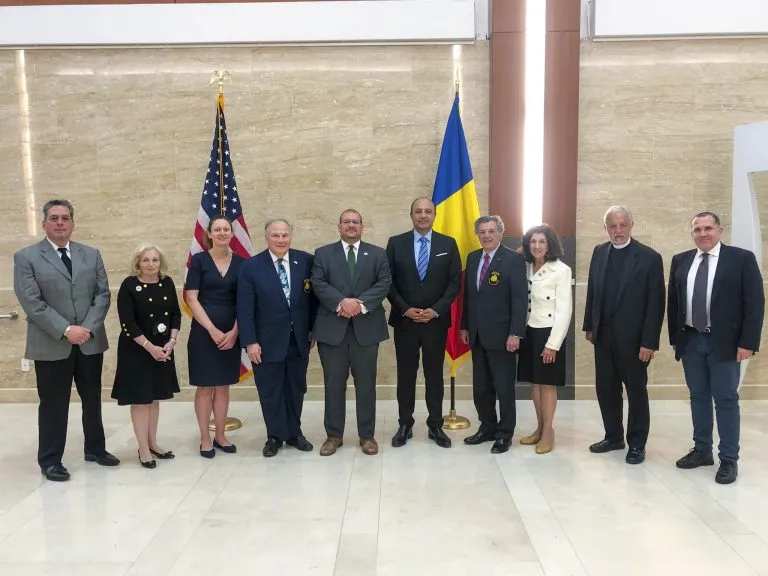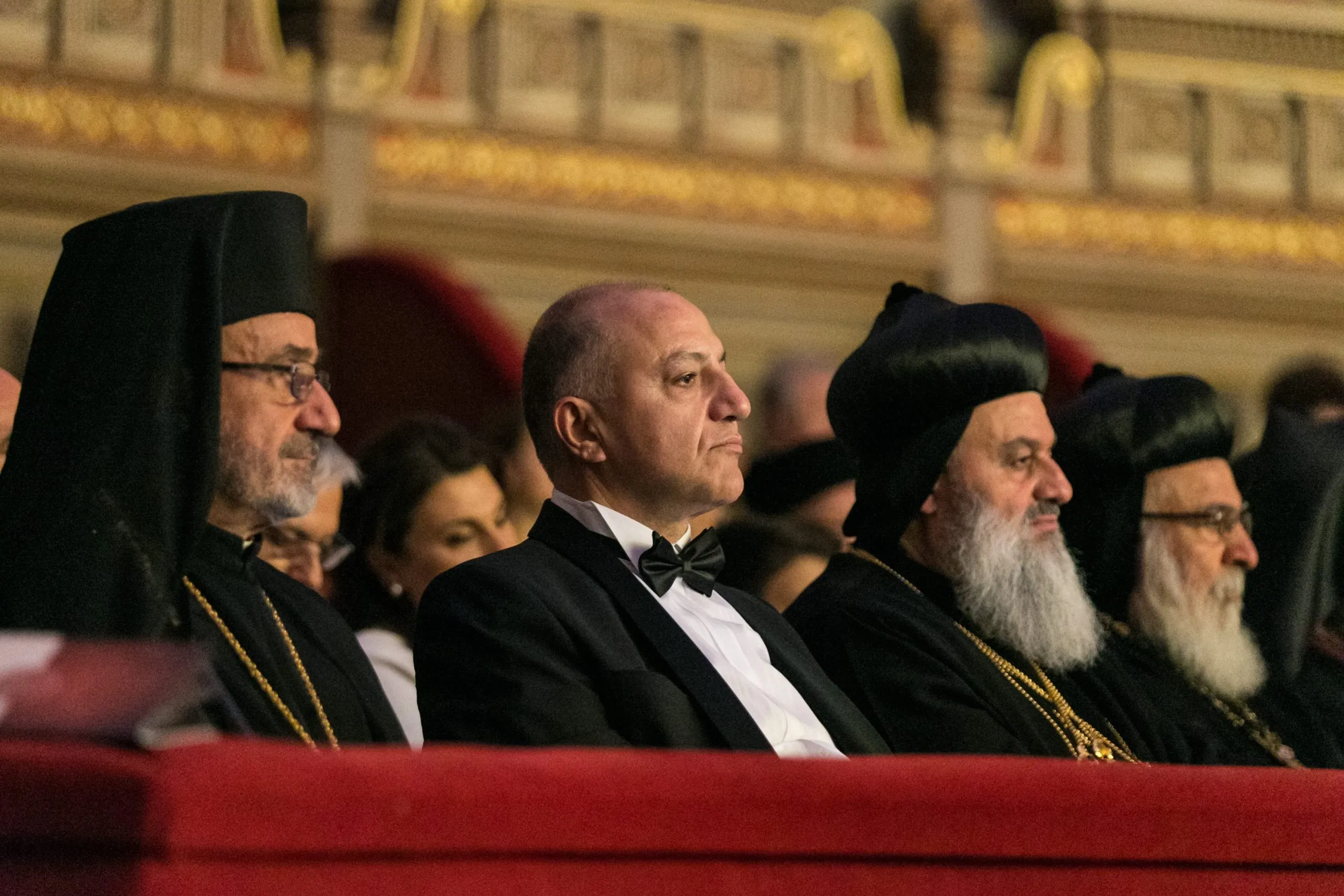



Almost 800 guests from Romania and abroad attended the Constantin Brâncoveanu Awards, presented by the Alexandrion Foundation on 27 September 2017 at the Romanian Athenaeum, the emblematic building of Romanian culture.
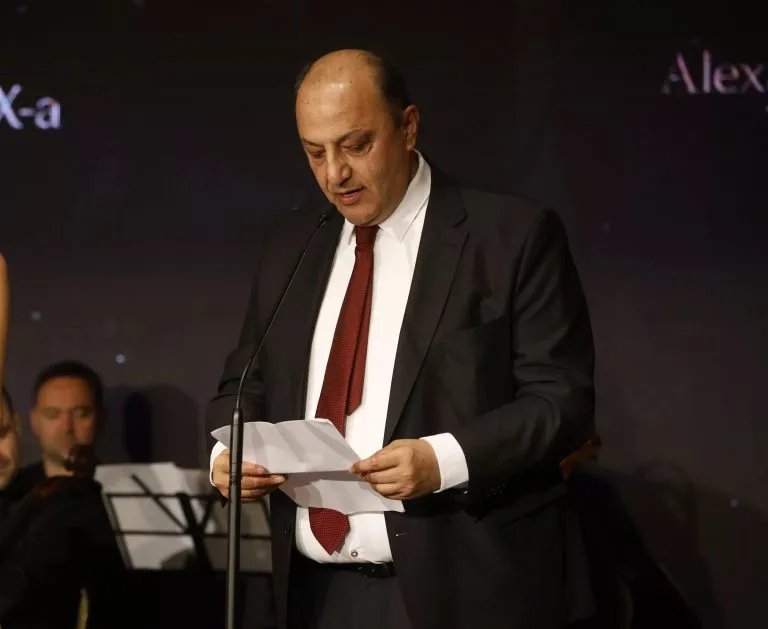
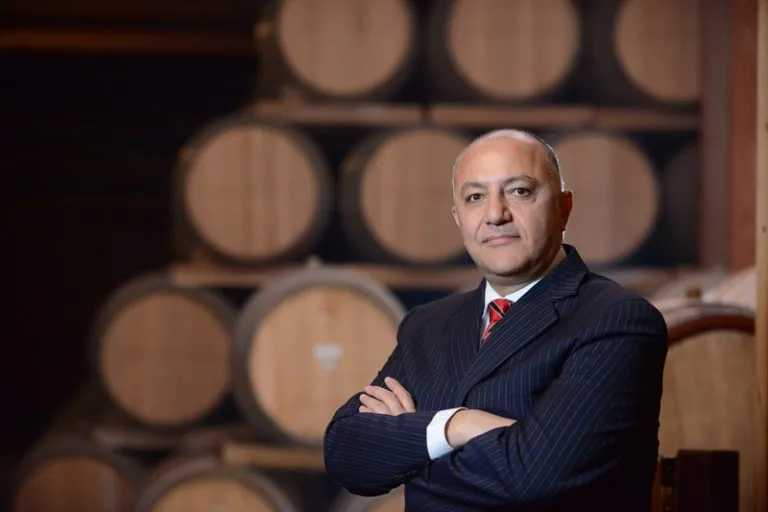
“It is a great honour for me and for the Alexandrion Foundation to be here this evening at the Romanian Athenaeum. And I am very glad that the Constantin Brâncoveanu Awards Gala has reached its fourth edition. I am happy to see that almost a quarter of the guests at this Gala come from other corners of the world: the USA, France, Cyprus, South Africa and Brazil. We stand beside the eminent people of Romanian culture and science, and we wish to go on honouring them and supporting them in their new projects,” said Nawaf Salameh, President of the Alexandrion Foundation.
In 2017, too, the Constantin Brâncoveanu Awards Gala followed the same democratic selection procedure as in previous years, with a similar jury structure. The jury president this year was Academician Dan Berindei, with Prof. Dr. Andrei Marga as vice-president. The other jury members were Academician Dumitru Radu Popescu, Prof. Dr. Ioan Scurtu, Prof. Dr. Grigore Constantinescu, Prof. Marian Moiceanu (architect), Dr. Dana Safta, Ștefan Râmniceanu (visual artist, laureate of the Academy prize and of the Brâncoveanu awards), Magda Mihăilescu (film critic), Prof. Dr. Victor Ioan Frunză and Dumitru Constantin, the jury secretary.
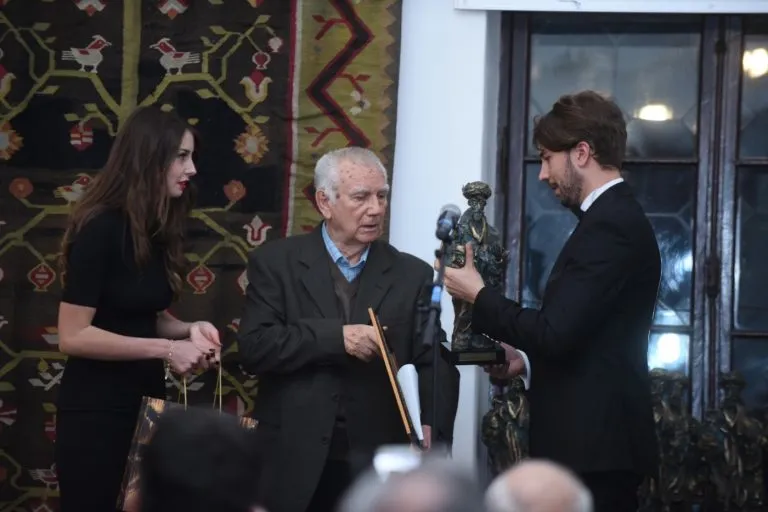
In accordance with the Regulations of the “Constantin Brâncoveanu” Awards Gala, each laureate received a special distinction, a bronze work by the renowned sculptor Ion Bolborea. In addition, the Alexandrion Foundation will support a future project of each laureate, on the basis of a decision of the Foundation’s Board.
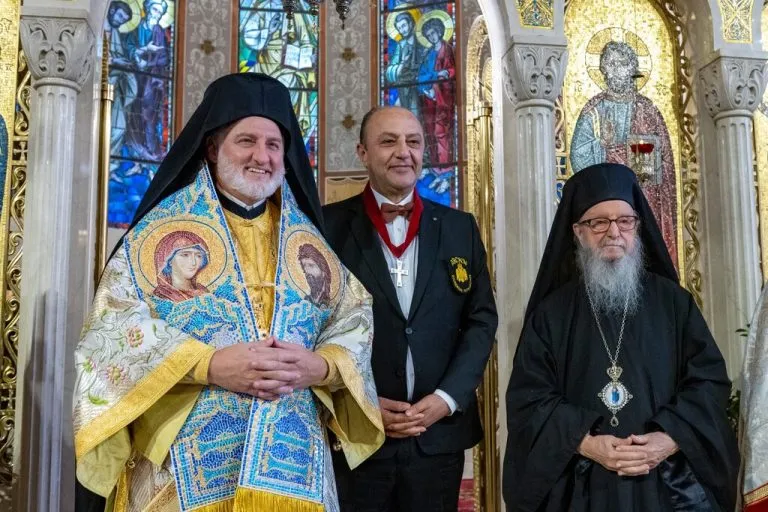
This year also brought a first: awards for Economics and Medicine were presented for the first time, in addition to the lifetime achievement awards given by the jury and two posthumous distinctions. The Foundation reserves the right to give up to two special awards. This year the Foundation’s Special Award went to His Holiness Patriarch Mor Ignatius Aphrem II, Syriac Orthodox Patriarch of Antioch and All the East.
The laureates of the “Constantin Brâncoveanu” Awards 2017 are:
Visual Arts Award – Geta Brătescu
Visual artist and one of the most important figures in Romanian art. Her oeuvre includes graphic works, drawing, collage, photography and book illustration.
Music Award – Horia Andreescu
Chief conductor of the musical ensembles of Radio Romania, conductor of the “George Enescu” Philharmonic and founder of the “Virtuosi of Bucharest” orchestra. He has worked with major European orchestras, including the London Symphony Orchestra, the Wiener Symphoniker and the Royal Philharmonic Orchestra. He has been honoured with important awards and distinctions at home and abroad.
Architecture Award – Prof. Dorin Ștefan (architect)
“Architecture comes to help this fantastic project that is man to live better (…) Perhaps Ceaușescu raised higher walls than Brâncoveanu. But those never became true edifices, because they lacked faith and culture”, said Dorin Ștefan on receiving the “Constantin Brâncoveanu” distinction.
Theatre Award – Oana Pellea
“I dedicate this award to the hard workers who leave their thoughts, dreams and sweat on the stage night after night. (…) Without culture, a people has no chance,” said Oana Pellea, actress and leading figure of the Romanian theatre.
Film Award – Luminița Gheorghiu
Actress and an unmistakable presence for over 30 years in the world of the seventh art. She became known for her role as the nurse in the film “The Death of Mr. Lazarescu”, and her role in “Child’s Pose” (2013) won her the Golden Bear at the Berlin International Film Festival.
History Award – Prof. Carol Iancu
“I hope we can speak of a recognition of the importance of the work of those who investigate the history of the ethnic communities that contributed to the prosperity of the Romanian state,” said the renowned historian, whose rich scholarly output focuses on the history of international relations and the history of the Jews.
Medicine Award – Academician Leon Dănăilă
A leading figure in world neurosurgery, with a prodigious career at the same hospital without interruption for 55 years. As a neurosurgeon at the “Gheorghe Marinescu” Hospital in Bucharest he has performed more than 40,000 operations. He is the one who introduced the microscope and the laser there for cerebral vascular and tumour surgery.
Economics Award – Prof. Dr. Ilie Șerbănescu
Doctor of economics and economic analyst, with a career of almost half a century in the press and television, and a former finance minister.
Posthumous distinction – Academician Augustin Buzura
One of the most valuable contemporary Romanian novelists, a conscience exemplarily committed to promoting values and defending national identity. Indeed, in 2014, at the first edition of the Constantin Brâncoveanu Awards, Augustin Buzura served on the jury.
Distinction (posthumous) – Prof. Mihai Maxim
A Romanian Turkologist and Ottomanist of international renown. He is the author of the important volume “Brâncoveanu and the Sublime Porte. New Documents from Turkish Archives”, which made fundamental contributions on the reign of the voivode and his relations with the Ottoman Empire.
Special Award of the Alexandrion Foundation – His Holiness Mor Ignatius Aphrem II, Syriac Orthodox Patriarch of Antioch and All the East
“We are very happy to be in Romania, among Romanians. The Romanian people have always been our friends. Voivode Constantin Brâncoveanu, whose name these awards bear, sacrificed himself in the name of faith. (…) We hope that we too will follow his example, will not yield to our enemies and will keep our faith. “, His Holiness declared on receiving the award on the stage of the Romanian Athenaeum.
“Nawaf Salameh” Scholarship – Maria Bianca Doriță – for excellent academic results
The “Nawaf Salameh” Scholarship has already become a tradition: every year a pupil of the school in the commune of Brâncoveni receives this award in recognition of outstanding academic results.
For those who could not be present, the awards were collected by relatives or friends. Thus, Geta Brătescu was represented by her friend, Alina Ledeanu. Luminița Gheorghiu’s award was received by her husband, Corneliu Botău. Mihai Buzura received the Literature distinction on behalf of his father Augustin Buzura (posthumous). And for the historian Mihai Maxim, the award was collected by the jury vice-president, Andrei Marga.
This year, the Constantin Brâncoveanu Awards Gala was on an exceptional scale: there were more awards, more guests from abroad, and the artistic programme was richer, taking place on the stage of the most important temple of Romanian culture, the Romanian Athenaeum.
Four internationally renowned sopranos, Oana Andra, Andrea Rost, Radostina Nikolaeva and Sanja Radisic, together with an orchestra of 51 musicians conducted by Maestro Alexandru Petrovici, delighted the audience.
For the first time, the show was directed by the well-known opera director Anda Tăbăcaru Hogea, who “conducted” the whole awards show and the recital that delighted the 800 guests of the “Constantin Brâncoveanu” Awards Gala.
The Alexandrion Foundation intends to organise similar events in London, New York and Berlin, in honour of Romanian cultural figures abroad. In this way the Foundation keeps its commitment to honour the values of Romanian culture, as Academician Dumitru Radu Popescu put it in the speech he gave at the ceremony at Mogoșoaia Palace in 2015, at the second edition of the Galas, when he received the Constantin Brâncoveanu Award for literature.
“It seems that today, in Romania, the most important award given to people of culture comes from the Alexandrion Foundation. In this award there seems to vibrate the spirit of Mediterranean antiquity and the fervour of a magic potion. In any case, this award takes in almost all the cultural dimensions of the Nobel Prize, (…) we could say, keeping the proportions, of course, that in Romania the Award can be called the grandson of the Nobel Prize!” (Academician Dumitru Radu Popescu).