


Bucharest, 28 April: Researcher, professor of electrical engineering and computer science and director of the Computer Science and Artificial Intelligence Laboratory (CSAIL) at MIT (Massachusetts Institute of Technology), deputy dean of research at the Stephen A. Schwarzman College of Computing – one of the most prestigious computing research institutions in the world – and speaker at international IT&C events, Daniela Rus is a multifaceted scientist with remarkable projects and expertise in robotics, data science and artificial intelligence. Daniela Rus studied and built her career in the United States of America (USA), where she also earned her PhD in computer science at Cornell University (New York), and is a member of the National Academy of Engineering and the American Academy of Arts and Sciences.
Her professional work focuses on research into building mechanisms that increase robots’ ability to reason, learn and adapt to complex tasks in human-centred environments, developing intuitive interfaces between robots and people, and creating the tools needed to design and fabricate new, advanced robots quickly and efficiently. The research has broad applications, including transportation, manufacturing, agriculture, construction, medicine and smart cities.
“I imagine a future where robots are so integrated in the fabric of human life that they become as common as smart phones are today. The field of robotics has the potential to greatly improve the quality of our lives at work, at home and at play,” says Daniela Rus on her website.
As a professor at MIT, Daniela Rus has shaped the professional future of many students, teaching them the principles of robot design and programming, with a focus on the mechanical and electronic principles behind building robots and on the algorithms, architectures and theories behind controlling and programming them.
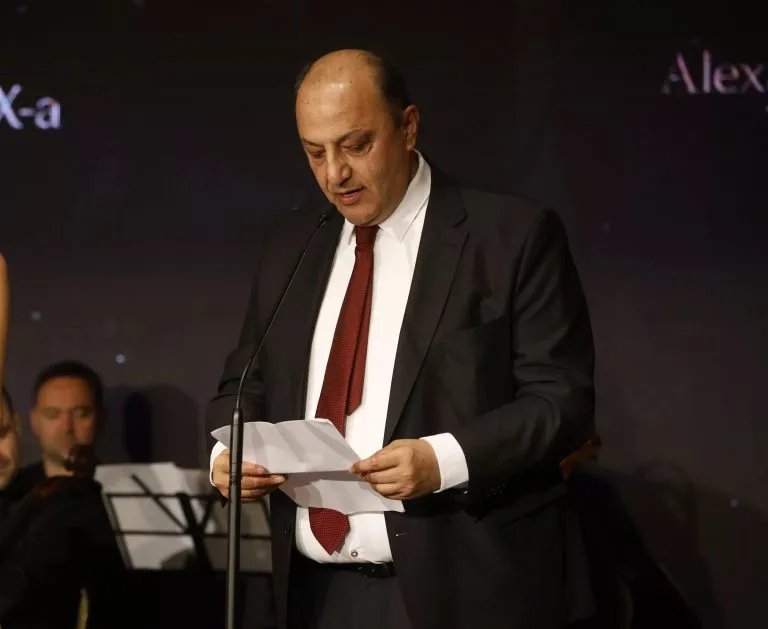
Her prodigious professional activity drew the attention of the Alexandrion Foundation, which awarded her in the science category at the second edition of the Constantin Brâncoveanu International Awards Gala, held in New York in December 2019. The Foundation presented her with the award for her achievements in robotics and in gratitude for her contribution to the progress of science worldwide. The Constantin Brâncoveanu International Awards Gala honours scientists, academics, personalities from the field of culture and business people with impressive careers, whose work has a global impact.
The scientist was recently appointed to the President’s Council of Advisors on Science and Technology (PCAST) at the White House. PCAST advises the White House on matters critical to US security and the economy, including policy on the future of work, the scientific and technological leadership of the United States, and the support of US research and development.
About the Alexandrion Foundation
The Alexandrion Foundation was established as a result of the many social activities carried out by the companies within the Alexandrion Group. The company’s social responsibility projects were thus taken over and have been carried out under the umbrella of the Alexandrion Foundation for more than 20 years. The Alexandrion Foundation has actively supported cultural achievement through the Constantin Brâncoveanu Awards since 2014, and this year they reach their 7th edition. Because the Alexandrion Foundation follows the Alexandrion Group in its evolution, it also honours excellence through the Constantin Brâncoveanu Diaspora Awards and the Constantin Brâncoveanu International Awards. Through the Matei Brâncoveanu Awards, the Alexandrion Foundation rewards the development potential of those who show social involvement, through their actions, research and exceptional achievements in their fields of activity. Over time, the Foundation has also made its mark in supporting the performance of Romanian sport. The Alexandrion Trophies, which honour the international performance of Romanian athletes, reached their fifth edition in 2020. The Foundation stood alongside the Romanian Olympic and Sports Committee at the Olympic Games in Athens in 2004, Beijing in 2008 and London in 2012. The support took the form of creating high-level training conditions that would enable young athletes to achieve the best possible results. A healthy lifestyle, in which sport has an important place, was also promoted.